The Science of Collagen Loss After 40 — What’s Really Happening to Your Skin
At some point in your forties, you may have looked in the mirror and noticed that something has shifted. Your skin looks a little less taut. Fine lines seem deeper. The firmness that once felt effortless now needs support. These changes are not sudden — they reflect a process that has been unfolding gradually since your mid-twenties. Collagen loss after 40 is real, measurable, and biologically well understood. Importantly, knowing what drives it is the first step toward choosing the right interventions.
This article covers the science of skin aging without the jargon overload. We’ll walk through what collagen actually does, why it declines, what accelerates that decline, and which evidence-backed ingredients are proven to visibly address the effects. Whether you are building your first serious anti-aging routine or refining one that’s already in place, this is the foundation worth understanding.
What Collagen Actually Does in Your Skin
Collagen is the most abundant protein in the human body — accounting for roughly thirty percent of total protein content. In the skin specifically, Type I and Type III collagen form the primary structural scaffolding of the dermis, the deep layer beneath the surface that gives skin its firmness, thickness, and resilience. Imagine the dermis as a dense, well-organized mattress: when collagen fibers are abundant and well-cross-linked, the surface above them remains smooth and supported. As those fibers thin and fragment, the surface begins to show the signs of what we recognize as aging skin.
Beyond structural support, collagen works alongside elastin — a protein responsible for skin’s ability to bounce back after movement — and glycosaminoglycans like hyaluronic acid, which fill the spaces between collagen fibers with moisture. Together, these components form the extracellular matrix (ECM): the biological environment that keeps skin looking plump, firm, and youthful. When the ECM degrades, skin changes on multiple levels simultaneously — it loses volume, elasticity, and moisture retention at the same time.
📖 Science Note: The skin’s dermis contains approximately 70–80% collagen by dry weight, predominantly Type I (80%) and Type III (15%). Type I collagen provides tensile strength; Type III contributes elasticity. Both decline with age, but Type III shows earlier and faster depletion — which is why skin begins losing its bounce before it visibly sags.
The Collagen Timeline: What Changes and When
Collagen decline is not a cliff — it’s a gradual slope that starts earlier than most people realize and accelerates at specific biological turning points.
Your Mid-Twenties: The Decline Begins
Fibroblast activity — the collagen-producing cells in the dermis — begins to slow in the mid-twenties. Collagen production drops by approximately one percent per year from this point. The loss is imperceptible at first, but it accumulates. By age thirty, most people have already lost several years’ worth of collagen density without noticing any visible change.
Your Thirties: The Accumulation Becomes Visible
Fine lines begin to appear, particularly around the eyes and mouth, where skin is thinner and movement is constant. Skin may feel slightly less hydrated. Recovery from fatigue or stress takes longer. These changes reflect both reduced collagen production and the beginning of structural disorganization in the collagen fiber network.
Perimenopause and Menopause: The Acceleration
This is where the science becomes particularly significant — and where many women first seek professional guidance. Estrogen plays a direct role in stimulating fibroblast activity and collagen synthesis. As estrogen levels decline during perimenopause and menopause, collagen loss accelerates dramatically. Research indicates that women can lose up to thirty percent of their skin’s collagen in the first five years following menopause — a rate far exceeding the gradual one-percent annual decline of earlier decades. This biological event is the primary driver of the more pronounced skin changes many women notice in their late forties and early fifties.
Your Fifties and Beyond: Compounded Structural Change
By this stage, both collagen quantity and quality are significantly diminished. The collagen fibers that remain tend to be less organized and less effectively cross-linked, meaning the structural support they provide is reduced even relative to their remaining volume. Skin thinning, increased laxity, and deeper lines reflect this compounded loss.
📖 Science Note: A landmark study published in the British Journal of Dermatology found that women lost an average of 2.1% of their facial collagen per year in the first five years post-menopause — and that this rate was significantly correlated with reduced estrogen levels. The study underscores why topical collagen-support strategies become especially relevant during and after this transition.
What Accelerates Collagen Loss — The Extrinsic Factors
Intrinsic aging — the biological clock — accounts for a significant portion of collagen loss, but external factors can dramatically accelerate the timeline. Understanding these accelerators is equally important as understanding the biology, because several of them are modifiable.
- UV Radiation (Photoaging): Ultraviolet radiation is the single largest extrinsic driver of collagen degradation. UV exposure stimulates the production of matrix metalloproteinases (MMPs) — enzymes that break down collagen fibers in the dermis. Repeated sun exposure without adequate protection accelerates structural collagen loss by decades. Photoaged skin under a microscope shows dramatically disordered, fragmented collagen compared to sun-protected skin of the same chronological age.
- Chronic Inflammation — ‘Inflammaging’: Low-grade, chronic inflammation — increasingly recognized in dermatology as ‘inflammaging’ — drives sustained MMP activity, leading to ongoing collagen degradation even without acute UV exposure. Poor sleep, processed diet, chronic stress, and environmental pollutants all contribute to this inflammatory background noise.
- Glycation: When sugar molecules bind to collagen fibers through a process called glycation, they form advanced glycation end products (AGEs) that make collagen fibers stiff, brittle, and less functional. High-sugar diets accelerate glycation, visibly aging the skin faster than dietary patterns lower in refined carbohydrates.
- Smoking: Nicotine reduces blood flow to the skin, limiting the oxygen and nutrient delivery that fibroblasts need for collagen synthesis. Smoking also directly stimulates MMP activity. The visible aging effect of long-term smoking is well documented in dermatological literature, with smokers showing significantly greater skin laxity and deeper lines than age-matched non-smokers.
Repetitive Muscle Movements: Expression lines form where muscle contractions repeatedly fold the skin. Over years, without adequate collagen support to maintain elasticity, these folds become permanently set. This is why expressions lines deepen as skin ages — not because movement increases, but because the structural resilience to recover from movement diminishes.
The Role of MMP Enzymes — The Collagen Destroyers
Matrix metalloproteinases deserve special attention because they are central to both the problem and the solution. MMPs are a family of enzymes naturally present in the skin — they play an essential role in tissue remodeling, wound response, and normal cell turnover. The issue is not their existence but their overactivation.
In aging skin exposed to UV radiation, inflammation, and oxidative stress, MMP activity becomes chronically elevated — particularly MMP-1 (collagenase), which directly cleaves and degrades Type I and Type III collagen fibers. The result is accelerated structural breakdown that outpaces even a still-functioning fibroblast’s ability to replace what is lost. This is why topical formulas that combine collagen synthesis stimulation with MMP inhibition are considered superior to those that target only one side of the equation.
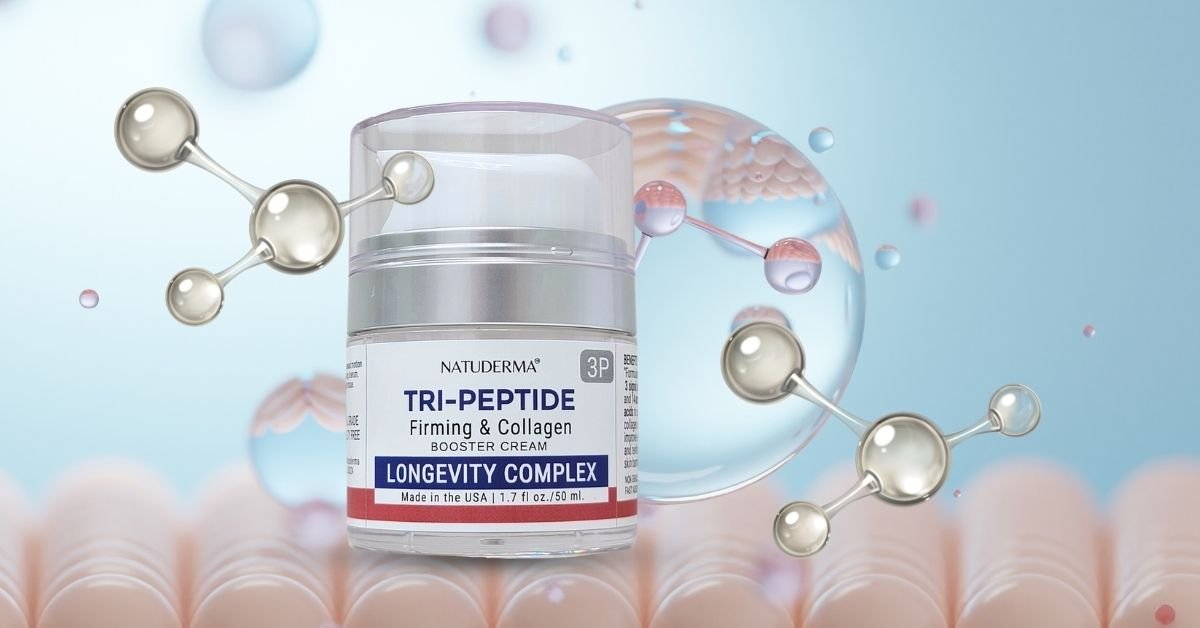
Palmitoyl Tetrapeptide-7, one of the three peptides in the Natuderma Tripeptide Cream, specifically modulates the inflammatory signaling pathways that drive MMP overactivation — complementing the collagen synthesis signals delivered by Tripeptide-1 and Tripeptide-5. Additionally, the EGCG from Organic Green Tea in the formula has been shown in published research to directly inhibit MMP-1 and MMP-3 activity, adding a botanical layer of collagen protection.
📖 Science Note: MMP-1 (interstitial collagenase) is the primary enzyme responsible for initiating collagen fiber degradation in the dermis. Its production is upregulated by UV exposure, IL-1β, TNF-α, and other pro-inflammatory mediators. Inhibition of MMP-1 via topical antioxidants and anti-inflammatory peptides is a recognized strategy in cosmeceutical formulation science.
What Actually Helps — Evidence-Backed Topical Strategies
With peptide skincare now appearing at every price point. Considering that are present in all luxury department store brands anGiven the biology above, an effective topical anti-aging strategy needs to address multiple mechanisms simultaneously: stimulate fibroblast collagen synthesis, inhibit MMP-driven degradation, provide hydration to the ECM environment, and defend against oxidative and inflammatory stressors. Here is where the evidence points:
Signal Peptides
As covered in our companion article, palmitoyl signal peptides are the most direct topical tool for re-engaging fibroblast collagen synthesis. Specifically, the combination of Palmitoyl Tripeptide-1, Tetrapeptide-7, and Tripeptide-5 targets collagen signaling through three complementary pathways — making this one of the most evidence-supported peptide combinations in professional skincare. [Read: What Are Peptides for Skin? →]
Retinoids (Vitamin A Derivatives)
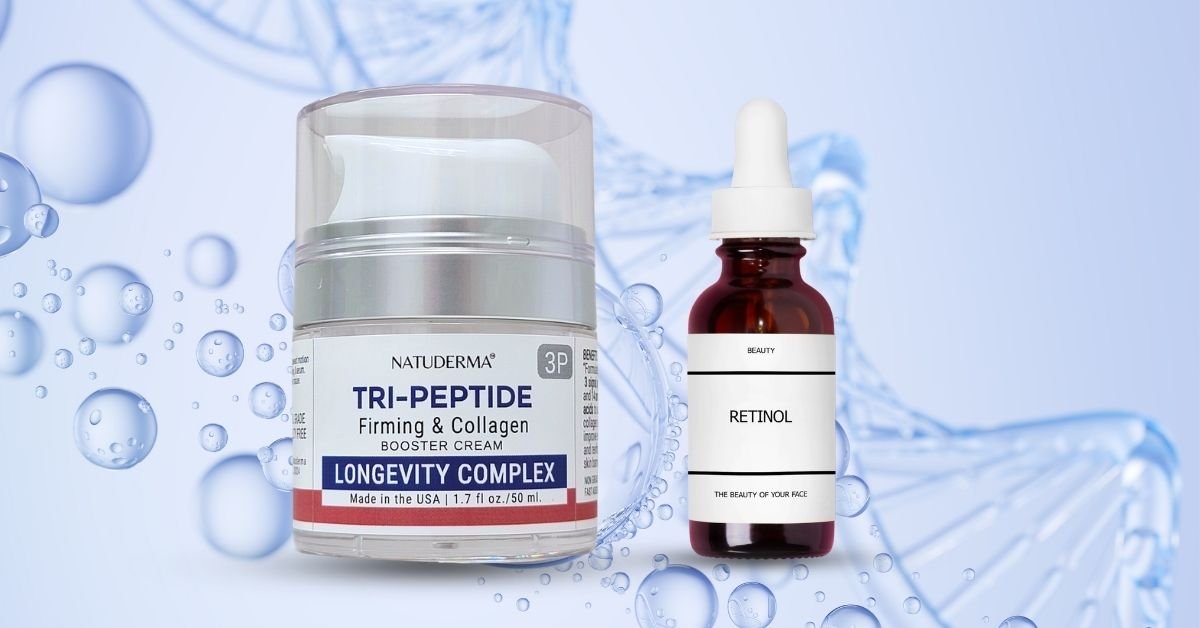
Retinol and its prescription-strength relatives (tretinoin, adapalene) remain the most rigorously studied topical agents for collagen support. They work via nuclear receptor pathways to directly upregulate collagen gene expression. However, they come with an adaptation period — initial dryness and sensitivity — that peptides do not. The two are complementary, not competing: peptides and retinoids used together address collagen from different biological angles.
Vitamin C (Ascorbic Acid)
Vitamin C is a required cofactor for the enzymes that cross-link collagen fibers into their stable triple-helix structure. Without adequate Vitamin C, newly synthesized collagen is structurally weak. Topical Vitamin C also acts as an antioxidant, neutralizing UV-generated free radicals before they activate MMP production. Stability in formulation is a challenge — look for L-Ascorbic Acid or more stable derivatives like Ascorbyl Glucoside.
Antioxidants — EGCG, Resveratrol, Niacinamide
As discussed, antioxidants reduce the oxidative stress that drives MMP overactivation. Green tea polyphenols (EGCG) in particular have demonstrated direct MMP-inhibiting activity in in-vitro studies. Niacinamide supports the barrier and reduces inflammatory signaling. These are not glamorous ingredients, but their contribution to preserving existing collagen is clinically meaningful.
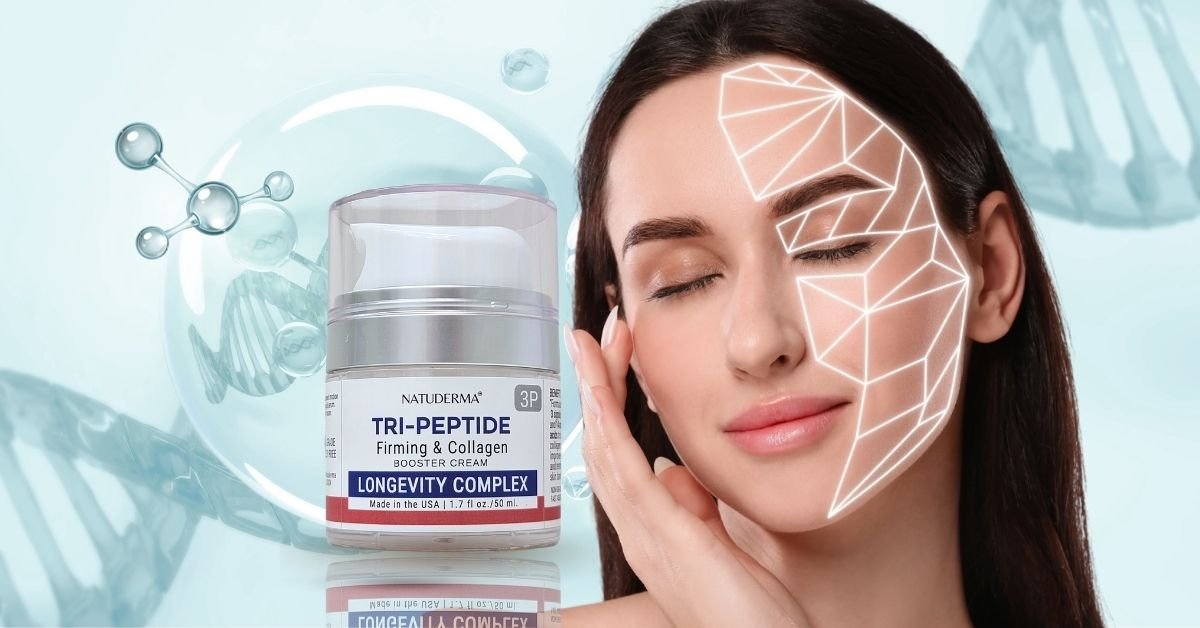
Support your skin’s collagen with a clinical-grade peptide formula. The Natuderma Tripeptide Firming & Collagen Booster Cream combines three palmitoyl signal peptides, Hydrolyzed Collagen, Botanical HA, and an EGCG-rich antioxidant complex in one daily-use cosmeceutical cream.
→ Shop the Natuderma Tripeptide Firming Cream: natuderma.com/product/tripeptide-firming-cream-mature-skin/ → Continue reading: Peptides vs. Retinol — Which Is Right for You? [Blog Post #3]