What Are Peptides for Skin — And Why Do Estheticians Swear by Them?
If you have spent any time researching anti-aging skincare, you have certainly come across the word ‘peptides.’ Indeed, it appears on product labels, in professional recommendations and dermatology blogs — often without a clear explanation of what peptides actually are or why they matter. So let’s change that. Understanding what peptides do for your skin is one of the most useful things you can learn if you want to build a routine that actually delivers visible results.
In this guide, we cover what peptides are at a biological level. Also, how they interact with aging skin, the different types you’ll encounter in skincare, and what to look for when choosing a peptide-based formula. By the end, you’ll know exactly why skincare professionals consider peptides the gold standard in anti-aging skincare; and why not all peptide products are created equal.
First: What Are Peptides, Exactly?
Peptides are short chains of amino acids; the same building blocks that make up proteins. When amino acids link together in sequences of two to fifty units, this combination creates a molecule known as a peptide. When those chains grow longer, they become full proteins. Collagen, for instance, is a protein made up of thousands of amino acids arranged in a specific triple-helix structure. The peptides relevant to skincare are much smaller fragments; short enough to interact with the skin’s surface receptors and influence cell behavior.
Furthermore, your skin naturally produces and uses peptides as part of its ongoing biological communication system. Think of them as molecular text messages — short, specific signals that tell skin cells what to do. In young, healthy skin, these messages flow efficiently: the body synthesizes collagen, maintains the skin barrier and regularly renew the structural proteins that keep skin firm. As we age, however, that communication begins to break down.
📖 Science Note: Amino acids are organic compounds that serve as the monomers of proteins. When two amino acids bond, the result is a dipeptide; three form a tripeptide; and so on. Dermatologist consider peptides of two to ten amino acids the most therapeutically active in topical formulations, as their small size allows for better skin penetration compared to full proteins
Why Aging Skin Needs Peptide Support
Generally, starting in our mid-twenties, the skin’s collagen production begins a slow but steady decline — roughly one percent per year. Consequently, By the time visible changes appear (fine lines, loss of firmness, a crepe-like texture), significant structural loss has already accumulated over years. This is not simply a surface-level issue. It reflects changes happening deep in the dermis, the layer of skin beneath the surface that houses the collagen and elastin fibers responsible for skin’s firmness and bounce.
One of the key reasons collagen production declines is the weakening of the skin’s own peptide signaling. When collagen fibers break down — whether through natural aging or environmental damage — the breakdown process normally produces peptide fragments that act as a distress signal to fibroblasts, the specialized skin cells that synthesize new collagen. These fragments essentially tell the fibroblasts: ‘Start producing collagen.’ Over time, this feedback loop becomes less efficient. The skin sends fewer signals, and fibroblast activity slows in response.
This is precisely the biological gap that topically applied signal peptides aim to fill. By delivering targeted peptide sequences directly to the skin, a well-formulated peptide cream can help re-engage the fibroblast response — encouraging the skin to support its own collagen framework and visibly improving firmness and texture over time.
📖 Science Note: Research published in the International Journal of Cosmetic Science (Lintner & Peschard, 2000) identified the tripeptide GHK (Glycine-Histidine-Lysine) as a naturally occurring fragment of collagen breakdown that stimulates fibroblast activity. This discovery laid the foundation for the development of palmitoyl peptide actives used in modern cosmeceutical formulations.
The Different Types of Peptides in Skincare
Not all peptides work the same way. Skincare formulations typically use one or more of four main peptide categories, each with a distinct mechanism. Understanding the differences helps you evaluate whether a product is genuinely effective or simply using ‘peptides’ as a marketing term.
1. Signal Peptides — The Collagen Communicators
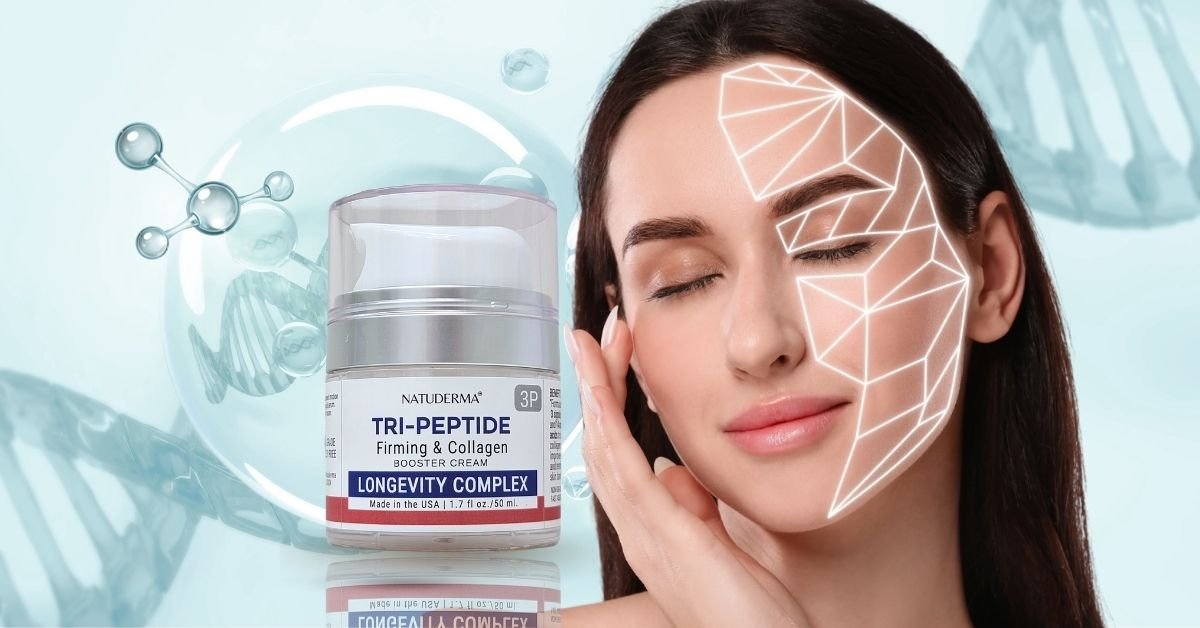
Signal peptides are the most widely used and best-researched category in anti-aging skincare. They work by mimicking naturally occurring peptide fragments that communicate with fibroblasts, signaling them to increase collagen, elastin, or hyaluronic acid production. The Palmitoyl Tripeptide-1, Palmitoyl Tetrapeptide-7, and Palmitoyl Tripeptide-5 complex in the Natuderma Tripeptide Firming Cream are all signal peptides — each targeting a different collagen signaling pathway simultaneously.
2. Carrier Peptides — The Delivery Specialists
Carrier peptides transport trace minerals — most commonly copper — to skin enzyme systems that require them for normal collagen and elastin synthesis. The most studied is GHK-Cu (copper peptide), which has also demonstrated wound-support and antioxidant properties in published research. Carrier peptides are valuable but work through a different mechanism than signal peptides.
3. Enzyme Inhibitor Peptides — The Breakdown Blockers
These peptides work by inhibiting the enzymes responsible for breaking down collagen and other structural proteins. Rather than stimulating new production, they protect existing collagen from accelerated degradation. Some formulations combine enzyme inhibitor peptides with signal peptides for a dual approach: produce more, lose less.
4. Neurotransmitter-Inhibiting Peptides — The Expression Line Softeners
Sometimes called ‘botox-like’ peptides — a comparison that is scientifically imprecise but commercially popular — these peptides work at the neuromuscular junction to temporarily reduce the intensity of muscle contractions that cause expression lines. Argireline (Acetyl Hexapeptide-3) is the most recognized example. Their effect is visible but localized, and they are most effective when used consistently over time.
Why ‘Palmitoyl’ Matters — The Penetration Problem
Here is something many peptide articles skip over — and it’s one of the most important factors determining whether a peptide product actually works. In their natural, free form, most peptides are hydrophilic, meaning they are attracted to water rather than fat. The outermost layer of skin — the stratum corneum — is primarily lipid-based, forming a selective barrier that resists water-soluble molecules. Free peptides simply cannot penetrate this barrier effectively enough to reach the dermal fibroblasts where their work needs to happen.
The solution is palmitoylation: the process of attaching a palmitic acid chain (a fatty acid) to the peptide sequence. This makes the molecule amphiphilic — it can interact with both water and fat — significantly improving its ability to partition into the skin’s lipid layers and penetrate to the dermis. This is why the highest-performing peptide formulas use palmitoyl peptides rather than their free-form equivalents. It is not a coincidence that the three peptides in the Natuderma Tripeptide Cream — Palmitoyl Tripeptide-1, Palmitoyl Tetrapeptide-7, and Palmitoyl Tripeptide-5 — are all palmitoylated. Without that fatty acid attachment, the activity you’re paying for stays largely on the surface.
📖 Science Note: The concept of lipophilic prodrug modification — attaching fatty acid chains to increase membrane permeability — is well established in pharmaceutical science and cosmetic chemists has successfully applied it to cosmeceutical peptides. Studies comparing palmitoylated vs. non-palmitoylated GHK demonstrate significantly improved transepidermal penetration in palmitoylated forms.
What to Look for in a Peptide Skincare Product
With peptide skincare now appearing at every price point. Considering that are present in all luxury department store brands and budget drugstore lines. Knowing how to distinguish an effective formulation from a cosmetically dressed-up moisturizer is genuinely useful.
- Look for named peptide sequences: Palmitoyl Tripeptide-1, Palmitoyl Tetrapeptide-7, Palmitoyl Tripeptide-5, Acetyl Hexapeptide-3, and GHK-Cu are examples of named, researched actives. ‘Peptide blend’ with no further specification tells you nothing about what is actually in the product or at what concentration.
- Multiple peptides targeting different pathways: A formula with two or three complementary signal peptides. Ech addressing a distinct collagen signaling mechanism — will outperform a single-peptide product. The synergy is the point.
- Check peptide position in the INCI list: Ingredients are listed in descending order of concentration. Peptides appearing near the bottom of a list are likely present at trace levels. Which may not be sufficient for meaningful activity.
- Palmitoylated forms over free-form sequences: As discussed above, palmitoyl attachments dramatically improve skin penetration. This is a meaningful formulation distinction, not marketing language.
- Supporting ingredients matter: Hydrolyzed Collagen provides the amino acid raw material for collagen synthesis. Botanical Hyaluronic Acid maintains the hydration environment peptides need to function. Antioxidants protect existing collagen from oxidative degradation. A good peptide cream is a system, not a single active in a base.
How Long Does It Take for Peptides to Work?
This is one of the most common questions — and the honest answer requires some context. Peptides work progressively because they are working with your skin’s own biological processes rather than overriding them. Collagen synthesis, fiber assembly, and matrix remodeling take time. You are not applying a filler or a temporary plumper; you are supporting a regenerative process.
That said, the timeline is more encouraging than many people expect. Most users notice improved hydration and skin texture within the first week of use. This reflects the humectant and barrier-supporting components of a well-rounded formula. Visible improvement in firmness and fine line depth typically becomes apparent at four to six weeks with consistent twice-daily application. Continued improvement accumulates over twelve weeks and beyond, which is why skincare professionals emphasize consistency above all else.
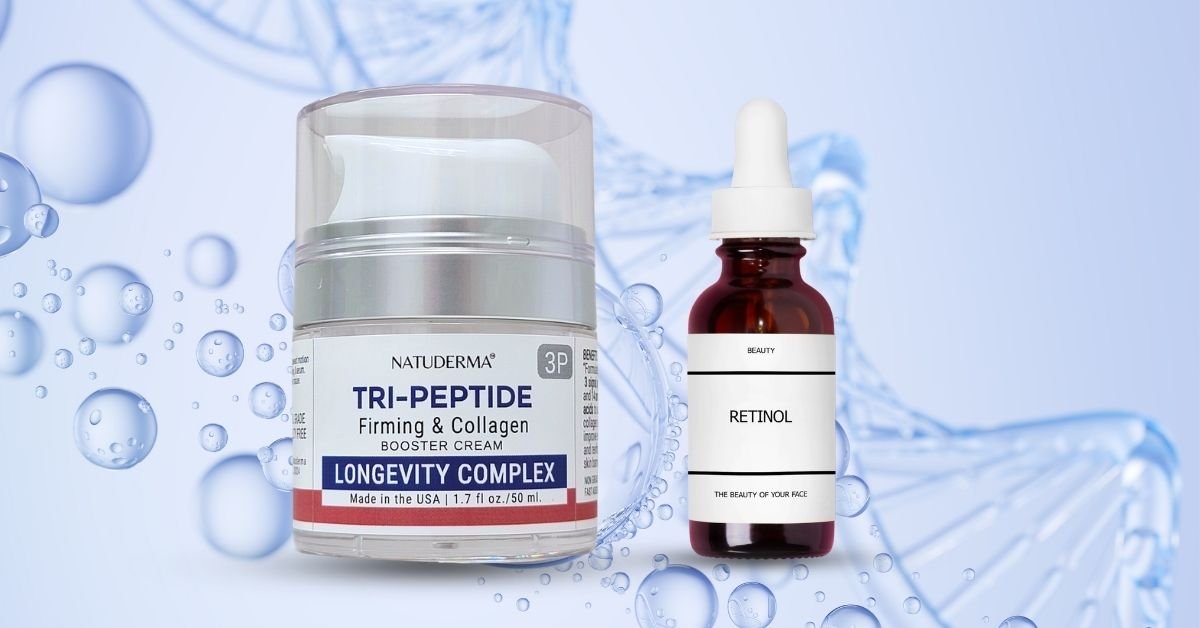
Unlike retinoids — which can cause an initial purging or sensitivity period — peptides are well tolerated from day one. There is no adaptation phase, no peeling, no increased sun sensitivity. They simply begin working, quietly and progressively, from the first application.
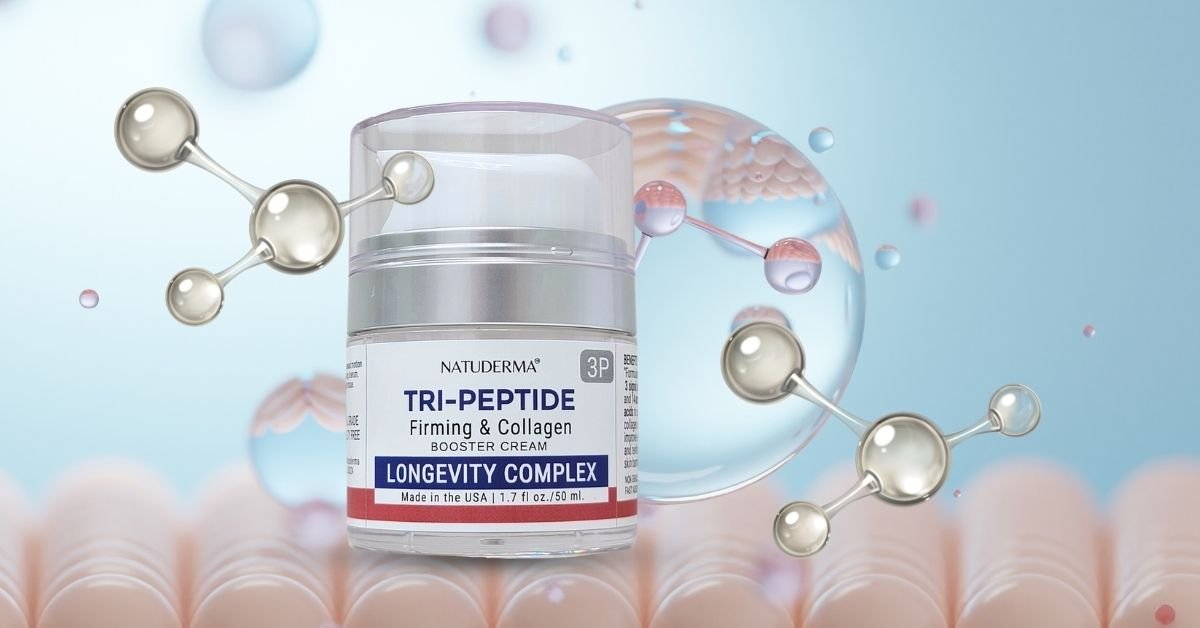
Ready to put peptide science to work for your skin? The Natuderma Tripeptide Firming & Collagen Booster Cream combines all three of the palmitoyl signal peptides discussed in this article : Palmitoyl Tripeptide-1, Palmitoyl Tetrapeptide-7, and Palmitoyl Tripeptide-5; in a cosmeceutical-grade daily formula.